
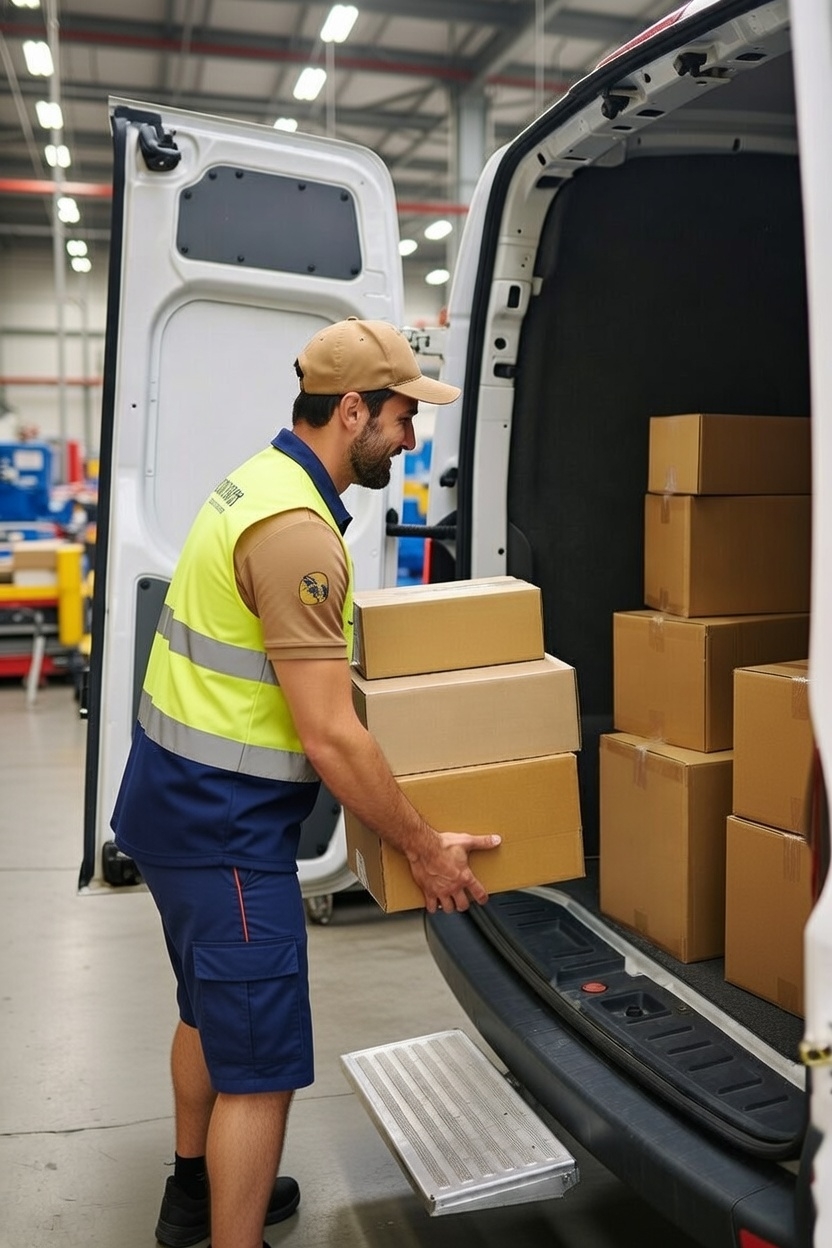
How you pack your delivery van might seem like a small detail, but it's one of the biggest factors affecting your efficiency, safety, and profitability as a courier driver. A poorly loaded van can cost you valuable time, increase the risk of damage to shipments, and even put strain on your vehicle and body. On the other hand, strategic van loading can dramatically improve your day-to-day operations.
Why Van Loading Matters More Than You Think
Most courier drivers focus on route planning—and rightfully so. But van loading is the forgotten half of the efficiency equation. Think about it: you can have the perfect optimised route, but if you're spending 5-10 minutes at each stop searching for the right packages or rearranging items to access what you need, you're completely negating those time savings. A well-optimised route saves you 30% on distance, but poor van organisation can waste 30% of your time at each delivery.
Combined with smart route optimisation, strategic loading is what separates drivers earning AUD $65k/year from those earning AUD $85k+.
Every second you spend searching for packages is a second you're not moving forward. Over a day with 50+ stops, fumbling for 2 minutes per delivery costs you 100 minutes—that's almost 2 hours wasted. On a 10-hour shift, that's 20% of your working time gone. At stop-rate pay, that's real money out of your pocket.
The Real Cost of Poor Van Organisation
Poor organisation isn't just inefficient—it's expensive. Here's what it costs you:
- Direct time waste: Searching for packages at each stop extends delivery times by 15-30%. For a driver completing 40 stops, that's 4-6 extra hours of work per week with zero extra pay. That's losing AUD $130-195 weekly.
- Physical strain & injuries: Digging through poorly organised loads puts massive stress on your back, knees, and shoulders. Many delivery drivers experience chronic back pain from constantly bending, twisting, and reaching through disorganized vans. Injuries mean time off work and mounting medical bills.
- Damaged shipments: Haphazard loading means packages shift, crush, and break during transit. If you're responsible for damages, that comes out of your pocket. Even if the company covers it, high damage rates get you flagged as unreliable.
- Customer dissatisfaction: Arriving late and handing over a damaged package ruins your reputation. Bad reviews = fewer opportunities and lower ratings.
- Vehicle wear & tear: Unbalanced, poorly distributed loads put strain on suspension, tires, and the axles. Overloading one side causes uneven tire wear and premature suspension failure. Repairs cost thousands.
- Safety hazards: Loose, improperly secured items can become projectiles during hard braking or sharp turns. A box flying at your head or hitting a customer is dangerous and potentially illegal.
- Lost opportunities: Late arrivals mean missed delivery windows and unhappy customers. Poor service history limits your access to better routes with higher-paying jobs.
The Zone-Loading Strategy: How Pros Do It
Professional logistics companies use "zone loading"—a system that cuts delivery time dramatically. Here's how to do it:
Step 1: Load in Reverse Order
Your last delivery should be loaded first (deepest in the van). Your first delivery should be loaded last (right at the door). This simple principle eliminates searching entirely. As you complete deliveries and remove packages, the next one is always at the entrance.
Step 2: Organize by Zone
Divide your van into sections representing different geographic areas or delivery sequence. Left side = Zone A (stops 1-15), center = Zone B (stops 16-30), right side = Zone C (stops 31-45). This way, when you arrive in Zone A, you're not digging through packages meant for Zone C.
Step 3: Secure Everything Properly
Use cargo straps, dividers, and shelving to secure packages. Nothing should shift during transit. This protects shipments AND makes your van more stable to drive.
Step 4: Weight Distribution Matters
Keep the weight balanced. Heavy items should be low and centered, not piled high on one side. This improves fuel efficiency and vehicle handling.
The Result
Drivers using zone loading report saving 20-40 minutes per day. That's 2-4 hours per week. At stop-rate pay of AUD $1.30-2.40 per delivery, that's an extra AUD $65-195 weekly in earnings.
The Bottom Line
Efficient organization is the second half of the delivery efficiency equation. It protects your shipments, saves you time, reduces physical strain, and improves your overall earnings. Combined with smart route planning, it transforms how you work.
Don't overlook this crucial part of your day. Small improvements create big impacts on your bottom line.
Related Articles
5 Ways to Optimise Your Delivery Routes
Learn the top strategies that professional drivers use to save time and increase their daily deliveries.
Mastering the Art of Loading: How Couriers Pack for Maximum Efficiency
Expert tips on packing and organising deliveries for maximum efficiency. External guide from Delivery Quote Compare.